(upbeat music)
Download transcript (.srt)
0:00
0:02
0:09
0:11
0:13
0:17
0:20
0:23
0:25
0:28
0:31
0:34
0:37
0:38
0:40
0:41
0:44
0:45
0:48
0:50
0:53
0:55
0:57
0:59
1:02
1:05
1:07
1:09
1:12
1:16
1:18
1:20
1:23
1:25
1:28
1:32
1:34
1:36
1:38
1:42
1:46
1:49
1:53
1:56
1:59
2:00
2:03
2:06
2:08
2:12
2:17
2:20
2:24
2:27
2:31
2:35
2:38
2:42
2:44
2:48
2:51
2:54
2:56
3:00
3:02
3:06
3:09
3:12
3:16
3:20
3:23
3:26
3:28
3:31
3:36
3:40
3:43
3:47
3:48
3:52
3:54
3:56
3:58
4:02
4:04
4:06
4:08
4:11
4:16
4:19
4:22
4:24
4:26
4:30
4:34
4:37
4:40
4:44
4:47
4:50
4:53
4:55
4:58
5:01
5:03
5:05
5:08
5:11
5:13
5:18
5:21
5:24
5:26
5:29
5:30
5:33
5:37
5:39
5:42
5:46
5:49
5:50
5:53
5:57
5:59
6:03
6:08
6:10
6:13
6:18
6:22
6:25
6:28
6:30
6:32
6:33
6:38
6:42
6:44
6:47
6:50
6:55
6:58
7:00
7:02
7:05
7:08
7:09
7:11
7:13
7:17
7:19
7:22
7:27
7:30
7:33
7:35
7:39
7:43
7:47
7:49
7:52
7:56
7:58
8:00
8:02
8:05
8:07
8:09
8:11
8:15
8:19
8:20
8:24
8:28
8:33
8:36
8:40
8:44
8:45
8:48
8:51
8:53
8:56
8:59
9:01
9:03
9:05
9:08
9:10
9:12
9:14
9:20
9:22
9:25
9:27
9:29
9:32
9:35
9:37
9:41
9:44
9:47
9:52
9:55
9:58
10:01
10:05
10:09
10:12
10:15
10:17
10:20
10:21
10:26
10:29
10:31
10:35
10:38
10:39
10:44
10:47
10:50
10:52
10:56
10:57
11:03
11:06
11:09
11:12
11:16
11:18
11:20
11:24
11:27
11:28
11:31
11:35
11:38
11:41
11:43
11:46
11:49
11:52
11:54
11:56
11:57
12:01
12:03
12:05
12:09
12:14
12:17
12:18
12:20
12:24
12:27
12:29
12:31
12:34
12:37
12:39
12:42
12:45
12:48
12:50
12:53
12:56
12:59
13:00
13:03
13:05
13:06
13:11
13:14
13:18
13:22
13:25
13:27
13:30
13:33
13:35
13:38
13:40
13:42
13:43
13:45
13:47
13:52
13:58
14:00
14:04
14:07
14:11
14:14
14:17
14:21
14:23
14:26
14:28
14:29
14:32
14:33
14:38
14:40
14:42
14:44
14:46
14:50
14:52
14:53
14:56
14:57
14:59
15:01
15:05
15:08
15:09
15:12
15:16
15:19
15:22
15:24
15:26
15:28
15:32
15:34
15:38
15:40
15:45
15:47
15:48
15:50
15:54
15:57
15:58
16:02
16:04
16:06
16:09
16:11
16:12
16:14
16:16
16:18
16:21
16:21
16:24
16:27
16:31
16:32
16:35
16:39
16:41
16:45
16:49
16:53
16:57
17:00
17:04
17:07
17:09
17:11
17:14
17:18
17:21
17:24
17:26
17:30
17:32
17:37
17:40
17:42
17:44
17:46
17:49
17:52
17:53
17:56
17:59
18:03
18:07
18:10
18:12
18:15
18:18
18:23
18:25
18:27
18:31
18:34
18:37
18:40
18:43
18:45
18:47
18:49
18:52
18:55
18:58
19:01
19:03
19:05
19:09
19:12
19:15
19:17
19:19
19:23
19:24
19:26
19:28
19:31
19:32
19:34
19:37
19:39
19:41
19:44
19:46
19:50
19:52
19:56
19:59
20:04
20:07
20:10
20:13
20:15
20:17
20:21
20:23
20:25
20:26
20:27
20:29
20:31
20:33
20:36
20:38
20:43
20:47
20:50
20:54
20:56
20:59
21:03
21:07
21:10
21:14
21:18
21:22
21:24
21:29
21:33
21:35
21:37
21:41
21:44
21:48
21:51
21:54
21:57
22:00
22:03
22:07
22:10
22:13
22:16
22:18
22:20
22:22
22:25
22:26
22:32
22:35
22:37
22:39
22:43
22:44
22:48
22:50
22:51
22:54
22:57
23:02
23:03
23:05
23:08
23:10
23:13
23:14
23:18
23:20
23:24
23:28
23:30
23:34
23:35
23:39
23:40
23:44
23:46
23:50
23:54
23:56
23:57
24:00
24:04
24:07
24:09
24:12
24:15
24:18
24:22
24:23
24:25
24:28
24:30
24:33
24:34
24:39
24:41
24:44
24:48
24:50
24:52
24:56
24:59
25:00
25:03
25:06
25:08
25:11
25:12
25:15
LAUREN: Hello and welcome listeners.
You are listening to Stories of Openness,
a limited series podcast created
by the Open Education team at Deakin University Library.
My name is Lauren Halcomb-Smith and I'm your host.
I'm a lecturer of Open Education at Deakin
and I'm on a mission to explore the impact
that Open Educational Resources or OER
are having on learning and teaching at Deakin.
OER are free textbooks and other learning materials
that anyone can use, adapt and share
unlike traditional textbooks
that are locked behind high costs
and copyright restrictions.
In this series, I'm talking with Deakin academics
about their experiences of creating
and using Open Resources.
This podcast is part of a research project
that uses podcasting as a research methodology.
So this conversation is both a podcast
and open research data.
I'm coming to you today from the beautiful,
traditional and unseated lands of the Wurundjeri people.
I gratefully acknowledge them as the traditional custodians
of these lands, seas and skies
and recognise that this has been a place
of learning, teaching and rich conversation for millennia.
And today, I am joined by the wonderful Jacqui McGregor
who is a longtime lecturer in Deakin's School
of Nursing and Midwifery.
Jacqui is a dual registered nurse and midwife
with extensive clinical experience
and has both a Master of Advanced Nursing neonatal
and a postgraduate qualification in neonatal intensive care
and higher education teaching and learning.
And today, we are chatting with Jacqui
about her recently published Open Textbook
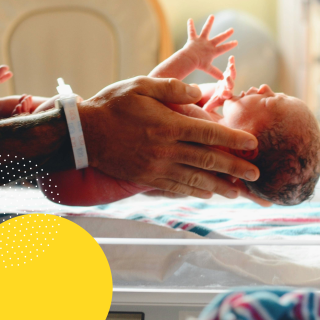
called Neonatal Care Essentials for Nursing and Midwifery,
a first in Australia resource for student midwives and nurses.
The resource aims to provide an entry-level understanding
of the role of the nurse midwife in the neonatal environment
and is uniquely structured around the key concepts
of warm, sweet, pink and calm.
Welcome, Jacqui.
Thank you so much for being here with me today.
Now, I'm really curious what led you
to want to create this amazing OER?
JACQUI: I could probably recap a bit of what you have just outlined.
So a lot of our students, resources, are expensive.
So in terms of accessing the text,
they're quite expensive for the students to purchase.
Originally, the idea came about for our midwifery cohort
who this one neonatal unit is just
well, a small component of their whole four-year double degree.
So to purchase a book for one unit
was probably financially not viable for a lot of them,
given the cost of the resources.
So we're thinking how could we help these students access
the information they needed without having to go and purchase
a very expensive book that wasn't available as an e-book?
The resources that are currently available
for neonatal specific content is generally aimed
at neonatal intensive care.
And our student cohort at Deakin looking
at undergraduate studies either in midwifery
or we offer a neonatal elective.
So the pitch of the current texts were also very high.
So not only was the cost a lot for the students,
but also they were pitched at a level
that was beyond what the scope of the practice
that they needed to be in.
LAUREN: Do you remember how much the textbook was?
JACQUI: Look, they ranged from anywhere from $170 up to $200 plus,
depending on which resource the students were looking at.
But as I said, with the access through the library,
the most current additions,
they were only able to access certain chapters
that we nominated, they weren't able to get the whole text,
which sort of then made us have to pick and choose
what was available if we were going to do it
through an e-book option for them.
But as I said, also the level of information there was a lot
for them to sift through when we just really
wanted them at an entry level.
LAUREN: What I heard is it wasn't fit for purpose
because it was for more of an intensive care.
JACQUI: So it was the current text for neonatal is pitched
at a level where the babies are an intensive care
requiring invasive procedures, invasive ventilation
and support.
The unit we’re providing for the students here at Deakin
was for caring for infants in the special care.
So the acuity is different from what they would have
been if they were looking after babies in the NICU.
We also found that previously when we didn't have this resource,
when we pitched our assessment task and we used a case study,
they would all go and open those text books
and give us information that was beyond their scope of practice.
So they were telling us about interventions
that were way beyond their capability
and not relevant for the care that we were actually
wanting them to draw on.
LAUREN: And were the previous resources available
appropriate for an Australian context?
JACQUI: There is only one Australian context
neonatal intensive care book. So yes, it's relevant
for the Australian context, but as I said,
it was designed for students undertaking postgraduate studies
in neonatal intensive care, so that higher acuity.
LAUREN: And so you said to yourself, it's time for us
to put together something for these students
that meets their needs and is fit for purpose.
What happened next?
JACQUI: Yeah, so well, I met with the library team
that have the big initiative behind all of this OER
and they were really responsive
for what I was wanting to do and really encouraging.
So I set about looking at which way I could do it.
Now, I had a lot of years of experience
in neonatal intensive care myself.
So I have a lot of information in my head,
but I needed to really draw it down to be specific
to that special care entry level.
I also had worked recently, well, in the past 10 years,
I had been working clinically as a leader of an education
department in nursing and midwifery.
So I had dealt with a lot of students coming through placements.
So I knew where we were needing to pitch this resource.
So I, embarked on whether, did I do it as a lecture style,
did I do it as a book, and initially, I started with a book
and had way too much information.
I think because of my NICU background,
I was pitching it way too hard and then just went,
"No, this is not right."
So we did a huge edit. Removed a lot of contents
so that it was just specific for what they were going to care for
in a special care nursery environment.
So a little bit of pathophysiology,
but majority is the immediate management.
I felt that the management was where they needed to start.
And then if they were really keen on working in that area,
they would go and do their own postgraduate studies
and then get more of that pathophysiology behind.
So there is a little bit of introductory pathophysiology,
but the majority is keeping those babies warm,
sweet, pink and calm.
LAUREN: Tell us a little more about that concept,
the warm, sweet, pink calm,
because you've structured the book around those four key ideas.
JACQUI: In terms of warm, sweet, pink and calm,
it's sort of an acronym that we use a lot in the nursery
because they all feed into each other with newborn babies.
Basically, warm being thermoregulation,
we need to maintain the baby's temperature in a certain range.
And if we don't maintain the baby's temperatures
when they're newborns in a neutral thermal range,
we find that they then start using glucose, which is the sweet.
So to warm themselves up, they'll start using metabolism
and they'll use their sugar.
They'll also start using their oxygen, which is pink.
So it's how all of those concepts sort of interplay.
And I guess that warm, sweet, pink calm
is a good way of people just remembering
that that's what we need to do.
And calm being keeping that baby in a
developmentally appropriate environment,
but also including the parents.
LAUREN: And when you read the book,
I love how those concepts are continually reinforced.
Like in the first section, that's about warm.
It's not just the title,
and then you go into the really detailed technical terminology.
The concept of warm is reinforced throughout that chapter.
JACQUI: And as I said, it's so vital that the students understand
that the impact of how they react
if a baby is cold or if the baby's too hot,
but more often we tend to have babies that are on the cooler side
and that's environmental.
They take on the temperature of a cold surface
or a cold stethoscope that may be placed on their chest
or if there's a breeze going across them.
So it's getting them really working in that environment
and have been aware of what's going on in certain areas
and how that can impact their temperature.
Because if they are cold,
they inevitably will be hypoglycaemic
so they'll start using their sugar and drop that.
They have very minimal reserves of sugars
when they're first born because they've relied on
that being supplied by the mum.
So maternal side in utero is delivered by the mum.
And then so when they're born,
unless they are able to attach to the breast and start breastfeeding,
which most of these babies have come to the nursery
because there is other underlying problems.
So they may not be able to get breast milk straight away.
So we've got to look at what other sources we can provide glucose.
So that's how it all interplays really well.
And as you said, even though warm is really the first chapter,
it will come into play in all of the other chapters
because at the end I've got nursing management
and then I'll say nursing management of the hypothermic baby,
the baby that's got a low temperature will be in glucose.
So yes, you're going to have to provide that glucose.
So there's a lot of interplay throughout.
LAUREN: And the book has lots of elements besides just text.
There's pop out blocks with key concepts highlighted.
There's little quizzes and interactivity and beautiful pictures.
What was the choice behind all of that?
JACQUI: It was to make it a little bit more interactive
because most texts, it's just a lot of content.
Having those little pop out quizzes
was to enable them to check their knowledge as they go through.
And sometimes that means that they may not need to read the chapter.
They could go straight to the quiz, take the quiz and think,
"Oh, well, actually I do need to brush up a little bit more on that."
It's also a good way for them if they're exam prepping
or something like that.
Although we are, as a whole, all universities are moving away
probably to a more authentic way of assessing students
and that exam sort of thing is going out the door.
But it will help them in simulations
and those sort of more simulated theory-based questions
that we ask as well.
So they can do their revision through those little pop up quizzes.
The pictures also draw a lot of attention to the eye.
So it does make the book a little bit more engaging.
But some of the pictures also that we'd found
that we could use were open access for us to be able to utilise
were to remove text.
So they, instead of having it written in text,
were able to use a visual colourful diagram
and that sort of remove that sort of death-by-reading.
LAUREN: Amazing.
And what you're referring to with the open source images
is you've chosen all the images in the book
to have an open license, which means that every single component
of the book can be reused by someone else in a different context.
JACQUI: Yes, that's correct.
And initially, I had some diagrams in there
and I worked really closely with the copyright team.
So we had to go and source similar diagrams
to enable that they could all be freely used again.
LAUREN: And who's using the book right now?
JACQUI: Funny you should say that.
I saw that ChatGPT has been in there since it's been published.
I've had other universities reach out
and saying that they're going to implement it
into their midwifery program, which was really nice to hear.
We at Deakin are using it for our undergraduate midwifery students
as well as we do run a postgraduate midwifery course
as well here at Deakin.
So our postgraduate midwifery
and we have an undergraduate neonatal elective.
So it's available in all of those three units
as our core resource.
We do enable the students also
or we put down other recommended texts
so that they can actually go and refer back to.
Because a lot of the information that I've provided
isn't firsthand knowledge of my own.
I have gone and used all of the multiple resources.
So those resources, if their students do want to extend their knowledge
in pathophysiology are available for the students
to go out and source themselves.
LAUREN: And it's so easy for them because every chapter has a table,
a list of references with a clickable link to the original source.
JACQUI: Yes.
LAUREN: So three different units at Deakin are using the textbook.
How many students do you think that is?
JACQUI: Probably,
well, so the neonatal elective, it's run twice in a year.
So in trimesters, one and three.
And can be anywhere between 60 to 80 students
taking that alone in both trimesters.
So you could be looking at 160 students
say taking it as an elective.
And then we'll have around about 50 postgrad a year
and about the equivalent in the undergrad.
So 260 students probably.
LAUREN: And if we did the maths, that's an astronomical amount
of savings for students given the textbook,
you said, is $160.
JACQUI: Absolutely.
And as I said, a lot of those textbooks
after they've finished this one unit of study,
unless they find working in the neonatal area,
Invigorating, like my passion, they tend to then just collect dust.
They would have purchased the book for one unit of study.
And then it would sit on their bookshelf as a bookend.
So this way, they could go back and access it.
And interestingly, I had a student who did the unit last year
and she's come back and said, well, I've now
taken this link with me, I can use it in the future.
So she said, I've always can just jump on if I want to check
something because it is relevant for midwives
that work in births suite because those babies
still need to be kept warm, sweet, pink in birth suite.
And they've still got a family.
So calm is very important as well.
And even the postnatal floor.
So it is relevant across the board of the midwifery continuum.
So I guess the resources, it's good
that they can click on a link and it's
there for them if they need the information.
LAUREN: It's so easy to access the book compared
to accessing an e-book through a traditional subscription
method where every single publisher uses
a different platform.
And it's so many logins to get to the resource.
Whereas this,
If you've typed it once into your browser,
you just have to type in a title, and it's there again.
JACQUI: And I think the other good thing is that the way it's laid out,
I've enabled that the management is separate
from the pathophysiology.
So if they're wanting specifically strategies
to help warm a baby up that has got respiratory distress,
they can just go to that chapter into the management
and find the appropriate methods that they can use.
LAUREN: Now, are you hearing any stories from students
about how they're using it and how they're finding it?
JACQUI: Well, as it was only officially published
at the end of the year, our only current cohort
that had it as an official published access
was the students that have just finished T3.
And I personally didn't take that unit this year,
but I had a link in my neonatal unit from last year.
And I found the students reached out
and said it was really helpful when
they were prepping for their exam.
So they found that the exam prepping was really straightforward.
They didn't get the link until sort of towards the middle
of the unit.
So they didn't find the benefits from the case study,
which really would have benefited from them.
Ask me that question in six months’ time
when they're in, the unit's been run again.
I think I'll have a lot more positive feedback
from the students because they'll be able to use it
for their case study as well.
LAUREN: And you're about to start teaching.
It's the first day of T1 today, actually.
You're about to start teaching with the textbook
in this trimester.
JACQUI: It'll be used again in the neonatal elective,
this trimester, so yes, I can get feedback.
And then in T2, we will have the midwifery cohorts
doing their unit.
LAUREN: And how are you going to change your teaching
now that you have this published resource available to you?
JACQUI: A lot of referencing will go back to the resource
so that when the students inquisitive and inquiring
about more, I can refer them back to the actual resource.
I'm also hoping that I'm going to start embedding it more
with links in the text and in there before the seminar.
We have a modular page before the seminar
for students to prep prior to their face-to-face seminars.
I'll use it a lot more in there so that they can come prepared
and with questions ready to go.
LAUREN: So that sounds to me like it's going
to help facilitate a flipped classroom environment
where the students can do more of the foundational conceptual
reading and then use their face-to-face time
with the instructor and their colleagues
for sort of more engaged participatory learning.
JACQUI: Yeah, and that enables them to ask more questions and more
the why, why have you done it that way?
If they haven't been able to sort of nut through that themselves
or gone and sourced other information, they think,
yes, absolutely, that flipped classroom.
LAUREN: So you won't have to spend as much of your time
explaining basic concepts?
JACQUI: Well, that's hopefully the plan is absolutely.
But I mean, there's always the students that students' life
is very busy as we understand.
Like they're usually juggling studies,
a job outside of university as well,
and then trying to multiple of other units to look at as well.
So yes, the idea is that they can come prepared,
but also it's a resource that they can have open in the class.
Should I ask questions?
They can then go and look for the answers first.
We do a lot of case-based type learning in the seminars
so they could go and use that resource and respond appropriately.
LAUREN: Having been on this journey for three years now,
going into the third year,
how has being so involved in open education informed
way that you think about teaching and resources?
JACQUI: Well, I think it's been really a great journey.
And as I said, initially, I think I had way too much
information available and needed to really tailor it
to the audience that it was meant to be for,
which was that entry level.
It has inspired me to do more.
I would like to actually make a more of an interactive part
at the end where a bit like a treasure island,
choose your own adventure, have a case study,
and then based on the student's responses,
could take them different ways.
Is what I really would like to have at the end.
So they can see the impact of what they do or don't do
and how that can affect the outcome.
So that is really what I'd like to do at the end of that book.
So that I'm inspired to keep doing something.
LAUREN: And the cool thing about open education
and open educational resources is you can continually update
the book with new content.
And you can actually involve your students
in generating some of that content.
So those contributions from the branching pathways,
choose your own adventure you're describing
could actually become content.
And then that opens up a world of possibility
for students feeling invested and involved
in contributing to a resource.
JACQUI: Yeah, and I'm hoping when I was speaking
to the library and staff the other day about
trying to get a bit more feedback from our current students.
So we're sort of thinking how we could design
to get some more responses so that the book
can be exactly that tailored more specifically to their needs.
So where they want more information or more detail
or if they want things ordered a little bit differently as well.
LAUREN: And you were saying that the book is being picked up
by other universities in Australia.
What sort of things are you hearing from them?
JACQUI: Basically, it was the day that it was officially launched
I received an e-mail from another university
just saying our library has suggested
this resource would be good for our unit.
She has, I've looked through it.
Looks amazing.
We'll definitely be implementing it.
Loved the way it flows.
So that was really sort of positive.
Yeah, I sort of thought, oh well, let's make it really worth it.
And then there's opportunities as well.
There are possibilities that the resource could be used by anyone.
And a lot of hospitals do have sort of an entry-level transitions
to specialty practice programs in-house.
So they will be able to use that as a resource as well for staff.
So they employ people into the nurseries
that may not have ever even changed a baby's nappy.
It'll become a resource that they could openly use as well.
LAUREN: What other stories about the impact of the OER do you have to share?
JACQUI: As I said, it's been really in its infancy at the moment
with it only officially being launched late in 2025.
Other than the cohort that I had in the middle of the year,
which I gave a link to, I don't know if I got as much engagement
out of that as I would have liked,
because students, unless it's glaringly lights and sirens,
sometimes don't go and actively seek and click on a link.
I'm hoping with the OER, it's got a beautiful front cover,
very captive to the eye.
That is what I'm going to use within the unit this year
so that they will actually visually see,
and then they might be more likely to click on the link and use it.
In answer to that question, watch this face.
LAUREN: Well, you'll have to come back again in a year's time
and tell us about more of the impact it's having.
Now, as you know, we're recording this podcast
as part of a research project.
And so I'm curious to hear from you what you think it all means.
What can your stories tell us about the impact
that open educational resources can have,
do have, on learning and teaching?
JACQUI: I think it enables an even playing field
for all students to access.
So if they don't have the financial resources
to purchase a textbook, it's there.
It's available for everybody.
It is in terms of the discipline that it's been designed for.
It's at an entry level, which is appropriate.
Whereas the textbooks that were available
was not set at that level.
It's appropriate for the population of students.
It was designed for.
It's free, so they don't have to outlay any money.
As you said, it's got the advantages
that I can keep updating it.
Whereas a traditional textbook every three to four years,
it goes back out to chapter authors
to re-envigorate or make sure that it's current practice.
So I think with an OER,
there's a lot more advantages
that I can keep updating that as latest changes.
I think it will have a lot of impact...
OERs have a lot of impact in terms
that we can get information out there
that is current more readily than a textbook can.
LAUREN: Before we close, Jacqui,
do you have a favourite part of the OER?
JACQUI: I really like how the library team got really behind me
in all of this and were able to resource
some really colourful creative pictures and diagrams.
It's very drawing to the eye.
The front cover is not specifically chosen
other than it was appropriate,
it was a bright, brightly coloured, it draws the eye.
I also like that we've got those quizzes,
but more importantly, I like how that at the end of every chapter,
I've made it uniform so that particular conditions,
they can look at caring for a baby
that's got respiratory distress
and knowing how do you keep it warm, sweet, pink
and calm based on whether it's born as a pre-term baby
or if it's a more-term baby
that needed a special care admission.
So I guess the management chapters I really like,
but the colourful pictures and diagrams as well.
LAUREN: It is a very beautiful book to look at,
very polished and very professional in its presentation.
It's lovely.
I have absolutely no expertise
beyond my lived experience of having children
and it's engaging and wonderful to look at,
and I've really enjoyed getting to explore it.
JACQUI: Thank you.
LAUREN: Alrighty, well, that brings us to the end of our conversation.
Thank you, Jacqui. JACQUI: Thank you.
LAUREN: Stories of Openness is a limited series
from the Open Education team at Deakin University Library.
It's part of a research-by-podcast project,
led by me, Lauren Halcomb-Smith,
with Angie Williamson, Danni Johnson, and Eddie Pavuna.
We choose Open wherever possible, including Audacity
for Editing, Castopod for hosting,
and music by Scott Holmes Music.
This podcast by Deakin University is licensed
under a CC-BY-NC license.
For more information and full acknowledgements,
please see our show notes.
(gentle music)
[BLANK_AUDIO]