[MUSIC]
Download transcript (.srt)
0:00
0:06
0:09
0:14
0:16
0:19
0:23
0:28
0:32
0:37
0:40
0:44
0:49
0:56
1:01
1:05
1:09
1:11
1:15
1:19
1:23
1:29
1:34
1:40
1:45
1:49
1:52
1:54
1:58
2:04
2:12
2:17
2:23
2:28
2:34
2:39
2:44
2:49
2:54
2:59
3:04
3:09
3:14
3:19
3:24
3:30
3:36
3:40
3:46
3:51
3:59
4:04
4:10
4:15
4:20
4:24
4:28
4:33
4:38
4:44
4:48
4:54
5:01
5:07
5:13
5:19
5:25
5:32
5:37
5:42
5:48
5:54
6:00
6:05
6:11
6:18
6:24
6:29
6:34
6:40
6:45
6:51
6:58
7:05
7:11
7:16
7:23
7:29
7:35
7:41
7:47
7:52
7:58
8:02
8:08
8:13
8:21
8:27
8:32
8:38
8:45
8:51
8:56
9:01
9:08
9:15
9:21
9:26
9:31
9:36
9:40
9:45
9:51
9:56
10:03
10:09
10:15
10:20
10:25
10:31
10:36
10:42
10:48
10:54
11:00
11:07
11:12
11:17
11:24
11:31
11:36
11:41
11:48
11:56
12:02
12:09
12:15
12:19
12:24
12:30
12:36
12:42
12:48
12:53
12:57
13:03
13:08
13:12
13:18
13:24
13:31
13:36
13:40
13:47
13:54
13:59
14:08
14:14
14:20
14:26
14:31
14:36
14:40
14:44
14:50
14:55
15:01
15:06
15:12
15:17
15:23
15:29
15:36
15:41
15:47
15:51
15:57
16:02
16:08
16:14
16:20
16:24
16:30
16:36
16:43
16:48
16:55
17:02
17:06
17:13
17:17
17:23
17:29
17:33
17:39
17:46
17:52
17:57
18:02
18:08
18:13
18:18
18:24
18:30
18:35
18:40
18:45
18:50
18:56
19:02
19:08
19:14
19:20
19:24
19:30
19:36
19:42
19:47
19:52
19:58
20:04
20:08
20:11
20:16
20:21
20:26
20:31
20:37
20:43
20:49
20:56
21:01
21:06
21:11
21:19
21:25
21:29
21:35
21:41
21:49
21:54
22:01
22:07
22:15
22:20
22:27
22:32
22:38
22:44
22:50
22:56
23:02
23:06
23:12
23:18
23:24
23:29
23:36
23:42
23:48
23:54
24:00
24:07
24:14
24:19
24:26
24:33
24:39
24:47
24:52
25:01
25:06
25:13
25:19
25:24
25:31
25:39
25:44
25:50
25:57
26:02
26:09
26:16
26:21
26:27
26:34
26:40
26:47
26:54
27:00
27:06
27:11
27:16
27:23
27:31
27:37
27:42
27:47
27:54
27:59
28:05
28:12
28:16
28:23
28:29
28:35
28:39
28:46
28:52
28:58
29:04
29:09
29:15
29:20
29:26
29:33
29:38
29:44
29:50
29:53
29:59
30:07
30:11
30:18
30:24
30:28
30:34
30:39
30:44
30:51
30:57
31:03
31:10
31:16
31:24
31:28
31:33
31:39
31:46
31:51
31:57
32:05
32:11
32:17
32:22
32:28
32:33
32:40
32:45
32:52
32:57
33:02
33:06
33:13
33:20
33:25
33:31
33:37
33:42
33:46
33:52
33:58
34:04
34:09
34:17
34:24
34:31
34:39
34:46
34:52
34:59
35:05
35:12
35:16
35:22
35:29
35:34
35:39
35:46
35:51
35:55
36:01
36:06
36:12
36:17
36:24
36:29
36:32
LAUREN: Hello and welcome to Stories of Openness,
a limited series podcast created by the Open Education team at Deakin University Library.
My name is Lauren Halcomb-Smith and I'm your host.
I'm a lecturer of Open Education at Deakin,
and I'm on a mission to learn about the impact that Open Educational Resources,
or OER, are having on learning and teaching at Deakin University.
OER are free textbooks and other learning materials that anyone can use,
adapt, and share, which is unlike traditional textbooks that can be expensive,
and limited by copyright and licensing restrictions.
In this series, I'm talking with Deakin academics as they share their stories of creating
and using Open Resources. This podcast is part of a research project that uses
podcasting as a research methodology, so this conversation is both a podcast and open research data.
I'm coming to you today from the beautiful, traditional, and unceded lands of the Boonwurrung people.
I gratefully acknowledge them as the traditional custodians of these lands,
seas, and skies, and recognise that this has been a place of learning,
teaching, and rich conversation for millennia.
My guest today is Cailin Mellberg from Deakin's Faculty of Health.
Cailin is an osteopath and lecturer of anatomy in the School of Medicine,
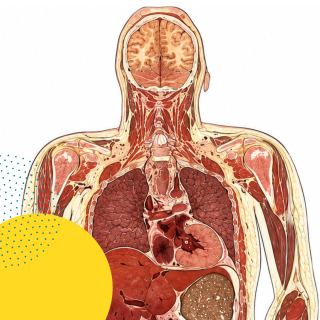
and the lead creator of one of our newest OER, the SPATIAL Project,
an open educational resource designed to improve student access to a digital body donor,
which is presented in cross-sections to support teaching anatomy within the School of Medicine.
This resource is a database of more than 100,000 reconstructed cross-sectional slices
of the human body presented as images, videos, and interactive files.
This is a very cool OER, and I have been looking forward to this conversation
since I first met Cailin last year. Welcome, Cailin.
CAILIN: Thank you for having me. It's an absolute pleasure.
LAUREN: We're going to jump in, Cailin. I know we have a lot to cover because this is such a fascinating
piece of work. Could you tell us the story of how you came to create this OER?
CAILIN: Absolutely. The goal of the anatomy program is ultimately to develop a usable mental model
of the human body that health practitioners can then use to actually solve real world problems.
So, a huge amount of time is invested within any anatomy curriculum to help students develop
those mental models and mental pictures. Overall, when we're thinking about the development of
those things, we're not talking about factual recall. A lot of learning that students try to do
to pass exams and do other things is often this text-based remember tables, remember this,
remember something else. But anatomy is slightly different in that we really need this usable
model within our minds. LAUREN: Yeah, that makes sense. CAILIN: That usable model needs to be able to be
manipulated within three-dimensional space to then help us solve real world problems. So,
whether you're performing a clinical examination and appreciating what structures are underneath the
skin as you're palpating different structures, whether you are injecting a needle or taking
blood or doing something along those sorts of lines or whether you're engaging in any sort of
surgical operation of any sort. You need to know what's underneath the skin before you start.
This is probably one of the greatest and most difficult challenges for students studying
anatomy to not just get through the language barriers that are there, learning lots of new words,
and to get through learning of different structures, but actually developing this mental map.
In order to, I guess, get to the point where we have this mental model, there's lots of different
tools and resources that we try and use as educators. And some of them are really quite cool,
like we have lectures and online materials as most people have, but there's also a whole heap of
practical classes that students engage in as well. So, within the practical classes, students have
got access to life-sized anatomical models of legs and arms and torsos. LAUREN: Cool! CAILIN: Yeah, like genuinely awesome,
you can remove parts and kind of look at them from the front, look at them from the back, and we have
all sorts of 3D printed hearts and lungs and brains and other things. And that's been a pretty cool
project in and of itself, where we spray painted them with whiteboard paint so that you can draw
and then just rub off and draw again. So, students can actually draw on like the coronary circulation
of the heart, where all those little vessels are going around and how they're actually supplied,
and for the brain draw on the different regions and lobes of the brain and colour them in and then
rub them out or draw over the top of them to show the vascular supply is relative to it.
LAUREN: Interesting. What else do you have? CAILIN: We also have some animal dissections that students
participate in so they get to dissect certain animal parts to look at the similarities and differences
between that and the human bodies that they're working with. Within the collection, we also have
potted specimens and human body donors which are used to support teaching. Overall,
really, really cool set of things and a really robust set of teaching resources to try and support
the learning, but there's also a lot of barriers. Historically, if you look at medical programs over
a long period of time and across schools of medicine, the actual amount of face-to-face time that
schools across the world have to teach anatomy has basically been declining continuously over a
long period of time and being replaced by digital learning opportunities, online experiences,
and just less overall face-to-face time. This kind of leaves us with this challenge of
a world that is moving into a digital space and even though we have these physical resources,
we don't have the time. We just physically don't have time with students. There's fairly strict
rules and regulations about the amount of like the use of the lab space that we have students that
sometimes miss workshops because they have illness or injury. We have students who have mental
health challenges at different points in time and arrive not ready to learn or just unable to
participate at different points in time. There's also low levels of formaldehyde that are associated
with some of the body donors that we have within our space and that can sometimes be a barrier for
some people who have sensitivity to formaldehyde or are pregnant and choose to not participate in those
sets of activities. We also have students that are traveling long distances and we're now delivering
at least for the medical program across multiple sites. So we have a site at Waurn Ponds, we have a
site at Ararat and we have a site at Warrnambool. And so although Waurn Ponds is fairly well resourced with
lots of different things, we're still building the resource sets at Ararat and Warrnambool as well.
LAUREN: So what I'm hearing is there are a number of really great resources out there but they
aren't accessible to many of your students for reasons of cost, geography or whatever. So how did
you get from that point to creating an OER? CAILIN: So one of the big impetuses for us looking at this was
to try and develop some resources that allowed all of these really major components of our medical
programs to have more access or better access to some resources to support them in a journey where
a lot of that journey is done independently and a lot of that journey is needing to be done in some
sort of a digital space. That kind of is a bit of the background for where we were before we
kicked everything off. The team then looked at what we could do to solve the problem and so we looked
to what resources were available and although there's an absolute stack of resources out there,
some examples that we looked at were things like Complete Anatomy, which is a digital modelling
of the human body that you can rotate in real space, you can augment it and look at it sitting
on your desk through your phone, you can do some all sorts of amazing things with it and being a
reconstruction of a human body from a digital standpoint, you can turn things off, turn things on,
hide things, really great for learning, they've also got some videos and other things but there's
some significant barriers that go to it. The first of the major barriers is cost. You need to get a
per student subscription to actually participate and have access to that and one of the other major
barriers is it presents a white male human in their healthy middle ages. LAUREN: Great... CAILIN: Which just doesn't
reflect really what we're trying to help medical students to understand and those within the
faculty of health, most of the patients that they work with, they're not healthy white males in their
prime. The vast majority of people are their patients, they're people from all sorts of ethnicities,
all sorts of age groups, all sorts of different demographics. Great resources but didn't quite hit
the mark for where we were and we just didn't have the funds to go that way. There's also
numerous other things that we'd previously used. An@tomedia had been a great resource but
the publisher that had looked after and housed An@tomedia previously found that An@tomedia
was no longer economically viable and so they no longer hosted the resource and so the resource
ended up with a different form of publication. In that process, the university now no longer
is able to get like an appropriate corporate membership that works. And so again a great resource but
no longer accessible to students. The other sorts of things that are there are just frightfully
expensive from Sectra tables to the IMAIOS. LAUREN: What kind of numbers are we talking about here? That
really cool program that you were talking about before that needed a per student subscription.
Do you remember how much that subscription would be per student? CAILIN: It depends on whether you're getting
a full price subscription or a student subscription. LAUREN: Okay. CAILIN: I think the figures we were looking at were
around about $99 per student they're about. By the time you're getting that for the number of
students across the School of Medicine that becomes fairly frightfully expensive fairly quickly,
we also looked at the Sectra tables, which again are a fantastic resource. We have to spend I don't
know $75,000 to buy a series of tables that you can put in a room and then you have to pay a
subscription to the services which again is thousands of dollars per year, maybe $30,000 for the
school per year. LAUREN: And that's a physical table which wouldn't address some of those challenges you
were talking about regional and remote students. CAILIN: Correct. Very cool, it does solve some problems,
it doesn't solve other problems. In reality, we also probably needed to consider more tables to
actually support all the different spaces which students are moving through and to give opportunity
for all the students to actually get access to what they needed. The idea that came with this OER
was really to say okay we need a resource that actually addresses these problems as best we
possibly can. We'd already many many years ago developed some very basic cross-sectional images
utilizing some of the Visible Human Project images that were obtained courtesy of the Visible
Human Project from the national US National Library of Medicine. So these are some publicly available
cross-sections of a body donor that were taken in the 90s. Those cross-sections are available for
download and we initially set out and just put a couple of those cross-sections in power points
and found that students were really engaging with those. We initially did a joint project with
Barwon Medical Imaging, Barwon Health and the Medical Imaging teams at Deakin to do a small pilot
to actually take some MRIs of the body and we went and labelled them all. And students have actually
loved that. There's so many ways in which that's already been integrated from when we first did that
project but the thing that was missing was to have the whole donor available and there's a big jump
from learning anatomy to jumping into medical imaging which requires you to appreciate how the colours
and shapes and things shift a little bit because each type of specific medical imaging that's done
has different shades of whites and greys that go with it. The cross-sections of the body donors
actually retain their actual colours of the human tissue that make it slightly easier for students
to transition their learning from the structures they're looking at on paper to actually seeing
those sections even when they're in cross-section to go oh well I can see that that would be this organ
because it's that colour . Beyond other things as well so particularly for that early transition and
that early learning into that cross-section anatomy space we just found that those very basic
in PowerPoint drop images were fantastic and we said what can we do with this?
I collaborated with the deputy course director of the medical imaging program at Deakin University
and the two of us set out on a well probably a six-year journey really by the time you take into
account from when we were first thinking about these to when we actually got it up and running
but we're very appreciative in 2024 to get a grant to actually take these cross-sectional images
yeah we chose the female donor although there is a male donor that you can use as well
we really wanted to represent as much diversity as we could within this space so we took an elderly
female donor that was again those images that we referenced at the very beginning the Visible
Human Project courtesy of the US National Library of Medicine and there's approximately 5,140
slices that have been taken that are approximately give or take around about one millimetre apart
all the way through the whole body and it depends exactly on where you go there's some of more like
point three of a mil, some of them are more like a mil, but basically that's what you've got through
the whole body. We realized that if you stack these on top of one another, there's enough information
per slice to actually create voxels or these 3D boxes of information that mean that you can then
represent the image as a three-dimensional structure not just a two-dimensional plane. We used
some fancy software and managed to actually pull together all of these 5,140 slices and recreate
this virtual donor. Not just in an axial set of images, which is how they were originally presented,
but also in all the different planes of the body. So if you think about like an X, Y and Z axis,
you've now got these planes of images in each of those three dimensions or each of those three
things so one breaks the body into sort of a top and a bottom which would be sort of our transverse
or axial plane. One's breaking it into a left and a right which is like a sagittal plane you can
look into, and one's breaking it into sort of a front and a back which is our coronal plane that
you can then scroll through the human body. But I guess the other thing that we wanted was we wanted
students to explore that was one of the key pedagogical things that we found by having these
unlabelled images students were engaged in trying to find the things that we were talking about
during lectures and during our workshops. What we ended up doing on that front is we looked to
the medical imaging space and we used some of the software that's in medical imaging already to
create what they call DICOM files. Yeah but basically MRIs and CTs take these cross-sectional
images and then they reconstruct them so that you can see them in different planes. There's already
technology and programs that exist to do this and so we basically used some of these programs
not the way they were intended ever to be used and managed to with a lot of toying within
using the maybe not the way they were first intended to actually produce these complete 3D
reconstructions of the body and from that we were able to output all of the different sections
in all of the different planes for all of the different regions and we made sure that we segmented
the different things. So there is a scout image of the whole body that you can do so you can literally
do the entire body in any of the three planes at once in all three planes. But we also used
radiographic collimation so we aligned all of the segmentations that we did to the radiographic
standards so if you look at an MRI CT the actual set of images that you would have for the SPATIAL
Project will align perfectly with that same set of images that come through from our project as well.
So hopefully they can be used to help students actually interpret what they might be looking at
when they introduce to the different types of images and scans across those different
sections. LAUREN: How long have students had access to the resource? CAILIN: The students themselves have had
access to a very very very basic PowerPoint for a few years that we've been trailing. But the SPATIAL
project became available in May and so they have only had a very short period of time. In May they
moved into their examination period out the other side of exams we've then promoted it at the
start of this semester to teaching within the space of only a few weeks of using this within the
Deakin spaces. We've had really significant uptake of people interested in actually looking at
the resource and downloading the files and engaging with them which has just been fantastic. There's
been over a thousand views and over 5,000 downloads in the space of a few weeks. LAUREN: In a few weeks.
Are you hearing any stories from the students themselves about how they're using it
and what they're doing with it, what it's like for them? CAILIN: Students have the opportunity. We have
a fancy computer that we have within the lab space that's able to take all of the images and
make them interactive. So rather than just having files that you can scroll through in the three
different planes, you can represent all three at the exact same time. And so the actual crosshair
in one image will line up to the exact crosshair in the next image and the one after. So you're getting,
you can pinpoint in all three planes simultaneously where you are in the body. And as you scroll in one,
it'll automatically adjust the other two which is the benefit of using DICOM files in the first place.
LAUREN: Okay. CAILIN: So students have been doing this and utilising this in the actual workshops and there's
those aha and wow moments that just come through every single session. And one of the biggest
challenges is just getting students through the actual station because the students that are just
lined up and then sitting around in groups talking over some of the things that they're finding and
trying to apply week by week the learnings to what's actually happening in that space. Then
having been able to provide them with access to these files outside of the space, I am left guessing
as to exactly how that's been utilised. But students anecdotally are coming in having downloading
different files and asking about the different file types that are available within that space as well.
LAUREN: So it sounds like you're seeing a fairly strong amount of engagement. CAILIN: Absolutely. LAUREN: Now how many
students would you say go through this program per year? CAILIN: If you're looking at the medical program,
the medical program have approximately 150 students per cohort and that can go up and down depending
on year level. LAUREN: Okay. CAILIN: You then have medical imaging which are high users of this which have closer
to 70 to 100 sort of students per year level passing through. LAUREN: Okay. CAILIN: And so the number of
vews and downloads for a relatively small starting space is fairly high engagement.
LAUREN: So you said 150 and then 75 to 100 so approximately 225 to 250 students per cohort.
CAILIN: Correct. LAUREN: And then tell me those numbers again the downloads and the visits.
CAILIN: We've had approximately a thousand views and approximately 5,000 downloads of the project so far.
LAUREN: Wow. In like three weeks. CAILIN: Thereabouts. Yep. LAUREN: And then you're observing this excitement and engagement
in the classroom. Any other stories that you're hearing in terms of the impact this is having
on learners? CAILIN: When we went to look at how we're going to present the database, one of the big things
that we spent a lot of time thinking about was how to actually address the problems that we had
at the beginning of the whole project. LAUREN: Yeah. CAILIN: The file types within the project. We have PDF files
that are about 100 megabytes that will run on any smart device full stop. We have individual
JPEG files, which are just those little image files that you can go and download one by one,
which are a little bit annoying because you kind of got to download stacks and do whatever
else with them. But they're great if you want to pull out an image to add into your into your notes
that are is a really relevant image to something or if you wanted to produce a lecture or do something
else, you can go and grab the individual image files. We also have video files so students can actually
scroll through video files and then obviously the interactive diagram files which require a little
bit more processing power on your computer. They're quite large files and they make up the vast
majority of the size of the database, which is well over 100 gigabytes of which the vast vast
majority are just those interactive file types. Because there are all of those file types sitting
there that are so easily accessible and so able to be stored on even the most basic devices,
it just makes it easy, it makes it accessible and it breaks down any barrier that people would have
or that students would have to just not having access to some of these things. We're hearing
just through talking with students that they have really appreciated having things available
that load fast, that are authentic and engaging and appropriate and allow them to continue to engage
with their learning outside of these really tight, dedicated learning opportunities week by week.
LAUREN: Very cool. You know what I was thinking earlier when you were talking about where you got these images
from. It's like a super open education project because you've taken openly licensed images from
another resource and then you've adapted them into your new resource, which is really the essence
of open education. What was it like for you as a teacher going through this open education project?
CAILIN: There's been a bit of a journey from the very first OER that we put together with the
GRAD Companion and then moving into this project, the SPATIAL Project. I guess for me philosophically,
this lines up perfectly with a lot of my beliefs and philosophies about teaching and pedagogy anyway,
but what I actually found is that the team and there's a big shout out to Angie Williamson
who brought together people at the very beginning of this and has just continued to be supportive
and help students and staff actually find each other and develop networks. I guess also to other
people that have been brought into the space like copyright team and digital learning futures.
And so through exposure to lots of other people doing OERs and through the networks that have been
established, it's helped me individually develop my own understanding of what OER is. It's shaped
the way that I go about creating resources for the students that I look after in my own units
and areas that I teach, but that also translates beyond that to the conversations that you have
when you're sitting in course and curriculum meetings and the ways in which you look at addressing
some of the barriers that students might be having to curriculum across the whole program.
For me, there's benefits in OER and in bypassing publishing barriers and making it better for
students, but it's also the broad of curricular impacts that can happen beyond those that are
just doing the OER side of things. LAUREN: Can you give me some examples about how going through this
experience and learning more about OER from other OER creators has informed decisions that you've
made sort of outside this project? CAILIN: Yeah, absolutely. When we look at developing curriculum for students,
a lot of the time, the curriculum, the image sets and the other things that we would use for
students or the resources that we would use for students have been ones where sometimes there's
been barriers to access. One of the resources that has been the primary textbook that we've used
for a very long time has been Moore's Clinically Orientated Anatomy and there's not a digital version of that
that's available through the library. Students would regularly end up having to purchase the
physical textbook for that or needing to find people who had a copy of the textbook or an old version.
The actual resource itself is an excellent resource. It's a really good textbook that's a nice
balance between too much and too little. It really is a fantastic resource to have, which is hence
why it was actually the prescribed text for the unit. But long-term looking at the viability of
our programs, wherever we can, we're looking to reduce the requirement for students to
need those resources to complete the units and that bridges beyond just what we're doing
individually as teachers that bridges into the conversations that you're having about what
resources are we actually expecting students to need to download or have access to. What ways can
they make sure that they're able to complete this program and this unit if they don't have access
to those sorts of resources. It just has enabled conversations around those different ideas and
topics and lots of different ways in which I think from where things were 10 or 15 years ago or
probably even less even 5 years ago, there has been a significant shift. I think COVID has helped
that a lot, although the pandemic as we discussed just briefly before this podcast has had all sorts
of impacts, all sorts of impacts on people's lives. One of the things that was a nice by-productive
COVID was that lots of people made a lot of their teaching and learning activities more open
and there were lots of benefits of that that have been retained out the other side of COVID as well
and so it's actually become more possible than ever before to be more open. Yeah. With already a
little bit of awareness in that space, you can start to make those choices actively individually
and as a team to continue to build better outcomes for students across the board. LAUREN: I'm loving this
story that you just told about the anatomy textbook and just to clarify that's a completely separate
piece of work to the SPATIAL Project that we're talking about. The OER you've just published. CAILIN: Correct.
LAUREN: That's amazing. It sounds to me like the experience of writing and creating an OER and working through
the OER program has shaped your teaching practice beyond this individual resource. CAILIN: Absolutely.
LAUREN: Are you hearing any stories about the impact that the SPATIAL Project is having outside of Deakin?
CAILIN: I haven't had any contact or stories yet of the impact beyond Deakin. Matt and I are interested
in presenting the SPATIAL Project and looking to continue to promote some of the work that we have
done in this space. For those that want access to similar sorts of things, there are lots of
different ways in which you can get access. You just need a lot of dollars for subscriptions to get
there. LAUREN: Not your resource. CAILIN: Not our resource. LAUREN: Comparable resources. CAILIN: Comparable resources. LAUREN: What's the
number amount that you would need to get a comparable resource? CAILIN: Well, I would have to have a quick
look at the latest update, but IMAIOS is one of the types of resources that's out there. And IMAIOS
in US dollars has a subscription fee that is in the US. I think it's 145 US dollars a month
or thereabouts for things like that. Or through university things, once you buy
tables, whether it's an Anatomage or Sectra or some of those things, the price per person is less,
but you've had to invest in technology and it's still limited to different spaces. So yeah,
free, open and we want to keep it that way. LAUREN: So while you haven't necessarily heard in the eight
or fewer weeks since your resource has been released, it sounds like you anticipate that the
resource could have significant impact, especially for potential institutions that don't have access
to $60,000 - $100,000 for comparable resources. CAILIN: Absolutely. And I think for us, the fact that we've now
shared this in a public space. And that's been one of the biggest barriers to this project. It was
about a terabyte worth of data that we were trying to host and have access that was publicly
available. So there were a lot of IT barriers and then a lot of hosting barriers that we ran into.
But we have managed to make a few adjustments to what we've shared and how we've gone about it
to get, make sure that we've got the most important parts of it sitting there. And that's been shared
on Figshare. So is now open to anybody who'd like to download that particular resource. Internationally,
there's lots of different opportunities beyond Australia and also within Australia for people that
are teaching health practitioners anatomy and want to improve their spatial awareness to start
engaging with these particular types of learning tools. We would love to see this project continue
and we'd love to see the project be developed into something where we develop some learning
activities. We've done a lot of work with students where we've built some pedagogy around
how we're using these images to develop spatial awareness within class already. So there's already
established curriculum that is linked to this. It would be wonderful in the future to actually
say okay well here's a database but here is also some best practice examples of how we've currently
used this in some of the different circumstances across different programs at Deakin University as well.
So watch this space. LAUREN: Another OER perhaps. CAILIN: Hopefully. LAUREN: What do you think all of this means? Like we've
been talking now for a little while about the experience of creating an OER, the impact that it's
had on learners in the last sort of amount of time since it's been released, the impact that
the experience has had on you. Almost in sort of like an auto ethnographic moment, what do you think
your stories tell us about the impact of OER more broadly? CAILIN: If the question is around what can we learn?
I think that funding for these initiatives is so important to get things started. There's lots of
people that have got great ideas but having that little bit of funding can push these little ideas
that lots of people have across the line into actually becoming projects. LAUREN: Yeah. CAILIN: There's then I guess
if there's a learning point it's making sure that you have the time and willingness to persist with
whatever OER you take on. This particular project has been a lot of time and a lot of passion has
gone into the creation of this and I think talking to lots of people who are OER creators unlike
some of the big grants where people can put on research assistants and have lots of support to do
the work. The funding for this is still fairly limited and relies on people investing time at this point
to actually produce these projects but what comes out of it is so valuable and the impacts that
you then have out the other side of beyond the actual OER resource which is created into having
people develop their own pedagogy and that pedagogy then having impacts across others within their
teams and others within whole programs as well as a resource that then becomes open indefinitely
for time for others to build on and continue to develop and co-create really further things
that come out of it. I think one of the other learnings is that the overall the benefits are
disproportional and what I mean by that is those that have money or a lot of money and are able to
buy these resources they're able to actually get access to things that may be comparable in different
way shapes and forms that maybe have the context or have the resource. And so the
disproportional benefits is actually the whole point of the OER in the first place, that it is
available to all but the benefits actually come often to those minority groups and those who
probably need it most. And so those disproportional benefits are a real thing that all teachers should
look at carefully within their programs. Just recognising that OER has lasting impact so it's
that lasting impact from the experiences of actually engaging with it and then from the resources
and the ways that that then unfolds over time. So that'd be my big learnings out of an OER project.
LAUREN: Amazing. Are there any other stories that you'd like to share or anything that I haven't asked you
about? CAILIN: Not specifically I'm very open to having all sorts of questions. I would highly encourage anyone
who's interested in exploring the human body to consider particularly for a health professional
because that's really what these were targeted at to go and actually explore what's underneath your
skin and think about how different structures are related. You can do this from any starting point.
The whole idea of this project is that it meets you wherever you are in your learning journey so if
you know that the heart and the lungs are located in the thorax in your chest cavity you can just go
and look at the chest cavity and be like well I know there's a heart and the lungs in here
and go and find hearts and lungs or if you're you know a final medical school student and you have
this really specific interest in tracing the thoracic duct which is this really tiny little
lymphatic tube that goes between the abdomen up through the thorax to the drain at the left
venous angle you can actually using these images start to trace some of these really intricate
structures and consider their relationships to the azygos vein and the descending thoracic aorta
and look at their relationship to the mediastinum, some of these other structures. Although
there's a lot of words there, the point of it is that if you have an idea of something and you can
see it or find it you can then go and actually explore it and look at how it's then related to
everything else within those spaces in such a powerful sort of way. LAUREN: My very last question, just
for fun, do you have a favourite part of the OER? CAILIN: I don't think I have a particular favourite. There's
been a lot of time and energy that's gone into different parts of the project and I think that my
favourite moment yeah maybe more so than a particular section was when we finally, after an
ungodly amount of time and I cannot tell you how long it took to get this actually happening,
but we managed to reconstruct the whole body in all three planes simultaneously and make it
interactive at once. The amount of data required like the raw file that we were using from the Visible
Human Project was around about 130 gigabytes of data. LAUREN: Wow. CAILIN: It's a very big file to start with and
then once you're trying to take that file and hold all of that in memory simultaneously to then
create different cross sections at once. It's a huge amount of information that you need a lot of
processing power for and we were under underdone from a technology standpoint and we're relying on
computers really exceeding their capacities to deliver this project for us. It was a really
nice moment when we finally pulled all of that together and we managed to actually, for the first
Time, visualise the scattered images of the whole human body in all three planes simultaneously. We're
able to scroll and explore and rotate. That for us I think is definitely a memory and a moment that
Matt and I will both take with us at the other side of this project. LAUREN: Amazing. Well, congratulations,
Cailin. I'm going to wrap us up with some credits but before I do I just want to say thank you again
so much for coming and sharing your stories. We first met over a year ago when you were still in
the process of finalising the resource and putting it all together and it's one of the projects that
has stuck in my mind for all the reasons that you've described and I've learned so much, so thank you.
CAILIN: Absolutely. Welcome. Thank you so much for having me. LAUREN: Stories of Openness is a limited series
from the Open Education team at Deakin University Library. It's part of a research by podcast project
led by me Lauren Halcomb-Smith with Angie Williamson, Danni Johnson and Eddie Pavuna. We choose
open wherever possible including Audacity for editing, Castopod for Hosting and Music
by Scott Holmes Music. This podcast by Deakin University is licensed under a CC by NC 4.0 license.
For more information and full acknowledgments please see our show notes. Thank you for listening
and thank you again Cailin.
[BLANK_AUDIO]