LAUREN: Hello and welcome listeners. You are listening to Stories of openness, a limited series podcast
Download transcript (.srt)
0:06
0:13
0:20
0:25
0:33
0:40
0:46
0:51
0:58
1:05
1:10
1:16
1:21
1:29
1:35
1:42
1:50
1:56
2:00
2:06
2:09
2:17
2:24
2:29
2:35
2:41
2:48
2:55
3:01
3:08
3:14
3:21
3:29
3:33
3:42
3:50
3:56
4:02
4:09
4:16
4:23
4:30
4:36
4:43
4:50
4:57
5:03
5:08
5:15
5:21
5:27
5:34
5:41
5:46
5:53
5:59
6:06
6:11
6:17
6:22
6:29
6:37
6:43
6:49
6:55
7:00
7:06
7:12
7:17
7:21
7:29
7:38
7:44
7:50
7:56
8:02
8:08
8:14
8:20
8:25
8:33
8:38
8:44
8:50
8:59
9:05
9:10
9:16
9:24
9:31
9:37
9:43
9:50
9:56
10:02
10:10
10:19
10:25
10:32
10:40
10:48
10:55
11:00
11:06
11:12
11:19
11:25
11:33
11:39
11:45
11:52
11:59
12:05
12:10
12:15
12:22
12:28
12:35
12:41
12:46
12:53
12:59
13:07
13:15
13:22
13:28
13:34
13:40
13:47
13:55
14:00
14:06
14:12
14:17
14:24
14:32
14:40
14:49
14:56
15:02
15:08
15:18
15:25
15:31
15:38
15:45
15:51
15:58
16:06
16:13
16:18
16:26
16:31
16:39
16:47
16:54
17:02
17:09
17:13
17:20
17:27
17:35
17:41
17:48
17:53
18:03
18:08
18:14
18:20
18:24
18:32
18:39
18:45
18:52
18:58
19:05
19:12
19:18
19:24
19:30
19:36
19:40
19:45
19:52
19:59
20:03
20:09
20:16
20:22
20:28
20:33
20:40
20:47
20:54
20:58
21:07
21:13
21:21
21:28
21:39
21:45
21:51
21:57
22:04
22:09
22:16
22:23
22:30
22:36
22:44
22:51
22:59
23:04
23:10
23:17
23:24
23:32
23:38
23:43
23:50
23:57
24:02
24:09
24:15
24:21
24:26
24:32
24:37
24:45
24:53
24:59
25:06
25:14
25:19
25:24
25:31
25:38
25:45
25:52
26:00
26:06
26:13
26:18
26:26
26:36
26:45
26:52
26:59
27:06
27:11
27:17
27:22
27:30
27:36
27:40
27:46
27:52
28:00
28:07
28:13
28:22
28:28
28:37
28:44
28:52
29:01
29:06
29:12
29:16
29:24
29:31
29:38
29:43
29:52
30:01
30:07
30:14
30:21
30:27
30:35
30:40
30:47
30:52
30:58
31:05
31:11
31:17
31:23
31:30
31:37
31:47
31:52
31:58
32:04
32:04
created by the Open Education team at Deakin University Library. My name is Lauren Halcomb-Smith,
and I'm your host. I'm a lecturer of Open Education at Deakin, and I'm on a mission to explore
the impact that open educational resources, or OER, are having on learning and teaching at Deakin.
OER are free textbooks and other learning materials that anyone can use, adapt, and share,
which is unlike traditional textbooks that can be locked or inaccessible behind high costs and
copyright restrictions. In this series, I'm talking with Deakin academics about their experiences
of creating and using open resources, and this podcast is part of a research project that uses
podcasting as a research methodology. So this conversation is both an episode of our podcast and
open research data. I'm coming to you today from the beautiful traditional and unceded lands of
the Wiradjuri people. I gratefully acknowledge them as the traditional custodians of these lands,
seas, and skies, and recognize that this has been a place of learning, teaching, and rich
conversation for millennia. Today, we are joined by Dr. Trish Corbett, who's an academic director
of teaching for the Bachelor of Marine Science in the School of Life and Environmental Science at Deakin,
and in addition to a very impressive resume, Trish is the author of a very cool OER called Sustainable
Marine Futures. The book is interactive, open access, and explores how ocean science, sustainability,
policy, and community intersect to address key marine challenges from climate change to food security.
Welcome, Trish. Thank you so much for being here. Thanks for having me.
All right, Trish. So before we jump into questions that I have actually written down,
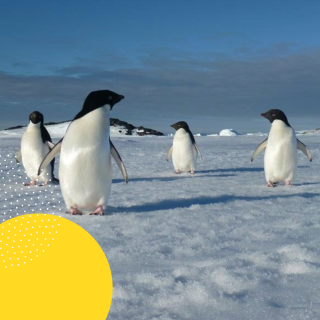
I need you to tell me about the penguins on the cover of the book.
TRISH: Yes, sorry, very good story. So they're Adélie penguins, and I was very fortunate for my PhD to be
studying in Antarctica, looking at human impacts, and along the way, I saw a lot of these gorgeous penguins
and thought that is the perfect cover for these texts. LAUREN: And so you took the picture. That's on the
cover. TRISH: Yes, so lucky. They actually, from a distance, they started running across to us, and we
just lay down on the ground and took photos. They're just beautiful. LAUREN: That is amazing. You were in
Antarctica doing your PhD research. How did you get from there to creating an OER?
TRISH: Yes, so after my PhD, and actually during I did bits and pieces of teaching, and after a while,
I figured out teaching is another huge passion of mine. So researching human impacts, but then also
looking at higher education, how can we have innovative teaching practice and get the best
learning from our students. So when I heard about OERs, and particularly the fact that you can have
these online open textbooks that have interactive activities, videos, all sorts of things I thought
this is for my students. LAUREN: So what was the need that your OER, the specific one that you have created,
Sustainable Marine Futures? What was the need that it was filling when you set out to make it?
TRISH: So there is no textbook like it, particularly in Australian focus. We have a number of different
policy type documents, or the UN Sustainable Development Goals, Ocean Decade Goals. So there's
lots of goals, policies, challenges that we are facing. And while there were these documents,
there wasn't a sort of way that I could make this more palatable for students to learn
right from the, well, what's the problem? Through to how can science and marine science help solve
those challenges? And how can that inform management? LAUREN: And who are the students that this resource
was developed for? What sort of level of higher education? Trish:So it's for a second year marine science
students. And so yeah, they're really moving from that first year where they learn their foundational
skills to really starting to put that into practice and really see, you know, how they can then start
to look forward to their future careers. LAUREN: What was the situation with these learners in the second
year unit with course resources before sustainable marine futures was developed? TRISH: This was a brand new
unit. So I saw it as a great opportunity. Yeah, to be able to design this fix, but also to be
able to bring the student's voice into the development of this text. LAUREN: Okay, tell me more about that.
It is something that I want to talk about in a little bit, but you've piqued my interest. Tell me
about the student voice in the development of the OER. TRISH: Yeah, so I was very lucky. So I had the
open education resource grant from Deakin for this text, also a student as partners project where
I was able to employ four students, two who were actually taking the unit and two who were in
the third year. So they would have had that in the past. And we also then had these students working
with the broader student cohort, doing some workshops, trying to get understanding of the types
of learning that support them. So all the way from, you know, sometimes in the textbook, you'll have
the opportunity to read something or listen to a podcast or watch a video. So really listening to
what the students wanted and we were actually changing what happened on a weekly basis. That's one of
the incredible things about open education resources is you can change them yearly, weekly, whenever
you like, so you can really tailor it to the particular cohort and the learners that you have.
LAUREN: If I'm understanding correctly, you are developing content with your four students who were also
working with the students in the learning unit itself and you were sort of releasing content
through the OER on a rolling basis. TRISH: Yeah, so we actually had, I forgot there was another student partner
project as well called Coffee Conversations, which I ran for that unit where students each week we
had anywhere from two to six students came along, had a coffee and they just gave us feedback. So it could
be in relation to the text which was actually piloted on that unit site or it could be something
completely different. But we just got, you know, students talking about how, you know, had one
student who was quite reluctant to come along and eventually came along and they said, oh, just
different colours or different sized fonts and things, things that they can click are really helpful.
So the next week we bought in colour, we bought in different fonts and so it's really working with
people who work in different ways to learn to be able to get the best out of, you know, we want
students to have that deep learning where they're really going to remember it rather than just
remember it for that period of time. LAUREN: People talk a lot about quality and OER and what occurs to me
when I'm listening to you is that is how much user feedback and dare I say peer review was involved
in the development of this content perhaps even more than you would expect in a traditional textbook.
TRISH: Yeah, in a completely different way and I think we want to know how students are going to learn
better. Why are we not asking them more? So it was a really rich experience in so many ways and
this was a cohort of students that I'd taught for a year previous. So I thought that they were going
to be really willing to give me feedback and I learnt very quickly that I needed to build the
relationship with them and create that safe space and that sense of belonging before they gave me that
feedback but once they did it was beautiful. I would share the changes that I had made and what I'd
heard from them and you could see the students like they're whispering to each other in class oh that
was my idea and it's just such a beautiful thing. I even saw things like better discussion in classes
because the students felt more comfortable with me and each other from those conversations and
that they'd really you know how to say in their learning. LAUREN: Let's take it back just a few steps.
You've told us about the mechanism through which the OER was created with a lot of student involvement,
student input, peer review. Tell us about that the OER itself. TRISH: Yeah sorry it follows it's essentially
when it was created each chapter is a week of the trimester for the unit that we're using it for but
it can be used for all kinds of different things. Anyone can pick that up you know from high school
through to tertiary education or just for fun and it follows these different challenges so things
like climate change, food security you know how we're going to deal with sea level rise or all sorts
of different challenges that we're facing even maintaining maritime sovereignty, safety and security.
So these big things that we're facing globally and it walks through you know what that challenge
is but then how are we going to actually work towards solving this? What can we do as individuals
and as marine scientists to help solve these challenges? LAUREN: And is it localized to the Australian context?
TRISH: Predominantly. So we definitely have examples from elsewhere but we have focused more on an
Australian perspective. LAUREN: That's a challenge that we see in course resource provision outside of
open resources is finding locally contextualized content for the Australian tertiary sector. Is that
something that you see in marine science? TRISH: Definitely and again it's more it's policy and strategies
things like that rather than actual texts. There's not a text that you could find on this sort of thing
in the Australian context. LAUREN: And I can imagine for second year students who are what there some of them
could be 19 and then up to you know a range of ages. I can imagine that digesting policy
documents is quite a big ask at that level. TRISH: Yeah definitely and this is more of a ease them into it
taster where they in third year they'll move into another unit where they'll look more in depth
but this is just getting them aware of things like the National Marine Science Plan which is
a really important document for marine scientists in Australia the United Nations sustainable
development goals and the Ocean Decade Goals. So I actually in developing the unit I looked at
all of these different policy strategies plans and I pulled out the 10-11 most important challenges
that were coming up across all of those and then yeah brought it into the Australian focus.
LAUREN: Love this I'm smiling so much. Let's talk about the impact that the OER has had on learning.
So can you think of any stories that illustrate the impact that sustainable marine futures is having
on learning in the classroom. TRISH: I think the fact that I mean the biggest thing when I was thinking
about this textbook is I wanted students to actually want to engage with the online component
of learning and so I think you know hearing students say oh you know I've just put on a podcast
and gone for a walk or you know I've chosen to watch a video for that and I put it on while I'm
doing it making dinner or something like that and I think the students were saying you know this is
something I look forward to like I save these up to be able to do this and I think just giving
those options for people to be able to learn in a way that supports them has been really valuable.
LAUREN: Do you find that there is a marked difference between the experience that your students are having
now compared to similar cohorts that you've taught in the past. TRISH: Yeah well certainly um I think that
there's more engagement with this sort of resource because if you've just got a textbook where students
are just reading it's a very different experience to where you've got lots of interactivity right
from flipping cards to be able to read more through to you know practice quizzes or crosswords or
things that students can do for fun. I think that's really made students want to engage more. LAUREN: And what
was the experience in your observation in terms of the impact on learning for those students who
contributed to the resource. TRISH: It was such a special cohort I think that we had students going to
different you know open education showcases, students as partners showcases, choosing to go and share
their experience because I think nearly every student told me they just felt like they were being
heard it was so important to them to have someone actually care even though sometimes I couldn't
deliver on what they wanted that was a sort of longer term plan but that they could see this is what
I'm hearing from you this is what I'm doing about it and then see their ideas like it was just it
was so beautiful particularly seeing the more quiet students see that they were heard and get really
happy about it that was yeah it was just beautiful just so many you know I joke and say you
know I'm a proud mum like it really feels like that. LAUREN: So those were the students in the unit itself
coming to your coffee conversations and chatting with your employed students. TRISH: Yes. LAUREN: Have you heard
up from those employed students those four students as partners whether it's had any impact on them?
TRISH: Well they're all becoming to the book launch we're having soon but they were very excited because
they're all listed as co-contributors they contributed to all of the H5P activities in the text
and they still, one in particular who's doing some further research with me still talks about
students as partners experience and how fun it was and I think that again it's that really having
your opinion genuinely valued that is what really made students you know get excited about it and
it's something that they'll always remember. LAUREN: I can only imagine the feeling of being an undergraduate
student and being essentially writing a textbook with your instructor that's like a pivotal
moment in your education. TRISH: yeah and I think a lot of people don't see the value in that but it is
such an incredible thing to be able to you know like have the students see you they still know that
you're their lecturer but it's more you're seeing them as an equal and it's a lot of this
building a sense of belonging it's a lot of building bringing in the same values as you know
traditional owners have had for years and years and thousands of years where that reciprocal
learning is so valuable you get so much out of that and I you know I get to learn from my students
I get to share experiences and yeah I think it's just I wouldn't teach in any other way now.
LAUREN: Wow I can just I'm just thinking like anyone who has ever had their talents and potential
noticed by a teacher and had those talents cultivated and had the opportunity to contribute
something will know what a special experience that would have been for your students as partners
and they'll probably never forget you and you sound really really proud of what you have created.
In what way has the experience of creating an OER informed your teaching practice?
TRISH: Yeah and that's a good and big question I think in so many ways I've done other student partner
projects before so I think that I will definitely continue to wherever I can different types of
students as partners projects because that is the most valuable experience that I've had is actually
working with students and asking the students what works for them then I get so much out of that when
I see my students learning and I see them getting something that maybe you know I've tried to
explain or I've given them something to read and I haven't got it but then we've gone down a different
path it's just such a good feeling to say them you know go on and succeed. LAUREN: This really resonates
with me from the perspective of open education is the core values of open education are transparency
open sharing and collaboration and that's just so neatly fits with what you're describing in
bringing your students along both in the unit itself and the students as partners working closely
with you as co-contributors. What other impact has this had whether it's broadly on how you think
about teaching or specifically what did you do differently in the classroom using this resource?
TRISH: So this year will be the first year that the OER has actually been published. Previously we trialled it
on the unit site and sort of developed it through to when we were ready to publish but I think it's
just you know we're going to actually integrate the chapters into the unit site which is something
really cool like I want the students to kind of work through it like it's a workbook and so they
can kind of you know just keep working away and then they can test themselves and go back and oh I
didn't quite get that and keep moving forward but I think yeah it's just really continuing to listen
to students not just I think that's something that I really want once the textbook is out to then
be able to go back and refine continue to talk to students and we can make these changes like this
is something that's so incredible is not only can we update material when climate change things
like that we get up to date information regularly, but we can continue to embed student voice every year
into these texts. LAUREN: So what you're describing is because OER are born digital and they exist
digitally and they have an open license you can update them and make changes on the fly as often
as you need to which is another way that we talk about quality and OER because we can update things
we don't have errors in print like you might see in a traditional textbook. TRISH: Yeah. Absolutely and you
can if there's something topical happens like you know for example obviously it's been happening
for a long time now, but the algal bloom in South Australia. If something like that came up that's a
really good example that we could embed into the textbook where you can do it straight away you don't
need to wait five years for the next version. LAUREN: And make your students buy a whole another
set of textbooks. TRISH: Exactly. LAUREN: so you were describing how what I heard your students had had a lot of
autonomy and choice and you sort of described the resource as almost like a workbook where students
are working through the different stages. This sounds like it does give the students a lot of
independence and a lot of autonomy. Has that freed up time for you to do other things in your
Teaching? TRISH: Absolutely. So it's yeah it's that blended learning flipped classroom style approach where
this is what they're doing at home and then when we come into the classroom I don't lecture at my
Students. It's everything is interactive, it's reciprocal learning it's you know teamwork where we're
got different scenarios and we're coming up with ways of how we're going to solve that and then
we're coming back together as a class and discussing it so it's all very much active learning
where students are solidifying what they've learned in the OER in the classroom. Lauren it does sound like
a lot of work though creating an OER and then you're writing content and you're managing
supervising students and you're asking your students for feedback. What was the the workload
impact on you? TRISH: it was a lot but I did do this well I started developed the new unit with the OER
in mind the whole time. If the unit was already developed I think it would have been a lot more work
as you know it already had to develop the units I had hours for that. But it was a lot of work. It's
taken me three years to actually get the OER up. I did have a grant where I employed a research
Assistant, but even that I think yeah it was still a lot of work and in future I think, if possible,
I would actually you know buy out some marking or something like that because while it's fantastic
to have a research assistant it's difficult if you you know need to look at that particular
challenge you need to do all of the reading to tell them what you want where you know then you
kind of may as well do it yourself so I think yeah definitely either having someone who is you know
ready to go who's able to kind of go and look at that literature and figure out okay these are the
key points in that challenge. That was that was a little bit difficult. They were still fantastic
and did a lot of work but it was more of the more directed than you know because I did I so much
on that I didn't have as much time to train them. It takes a long time so you've got to have you've
got to find all the resources. So for them while I've done writing and adapting within the textbook
a lot of it has been from other open education resources or open access resources that we've used
parts of and sort of put it together. So yeah, when you're going down making sure that everything
is the copyright is as it should be all of that sort of stuff takes a long time. And even I found
wrapping my head around some things that I thought I was okay, it actually would have meant that the
whole text had to be copyrighted in the same way as that resource to be able to use it. So there
was definitely a big learning curve there, but everyone has been so fantastic. My student partners
of research assistant, the well all of the students who helped me, all incredible all the library
staff they've put in a lot of time. And I've always felt supported and not felt pressure even
though it has taken a long time for me to get the resource out. LAUREN: so what I'm hearing is a few things.
The first is that, by dint of the fact that you designed this or we are at the same time as
designing a unit, the unit itself was open by design which really facilitated an open textbook
and that there was a lot of subject matter expertise besides your own contributing to the quality of
the resource. So you had copyright expertise, you had publishing expertise from the library, and you
had student expertise contributing. TRISH: yes absolutely yeah so it was it was still a lot of work
putting everything together but it was certainly, it would have been a lot more difficult if it was
just me and a unit that had already been developed that I was trying to do this textbook. LAUREN: I think it's
important to call out those different collaborators that were involved though because I think there's
sort of a misconception in OER that it's just you know the loan academic you know tapping away
at their keyboard and then they just stick something on the web which is absolutely not what this is.
TRISH: Not at all. I think yeah that the OER team have been incredible. It would probably be another three
years before I got it out if I didn't have that support. So I essentially came up with word documents
that I'd highlighted with where I got different parts and the incredible OER staff put that into the
Textbook. They found additional open access images. They made it look pretty you know. They did so
much stuff and then a copyright team do a huge amount of work so it's it's massive and yeah I wouldn't
it would take a very long time to do it myself. I certainly wouldn't take on a full textbook
if I had to do it myself. LAUREN: And of the things that really excites me about hearing the attention to
detail on the images and the sources that you're citing and the fact that the resource is openly
Licensed, it means that students can use the content of that resource in the way that best serves
their learning. So if you have students who find big chunks of text hard to parse they could use
their preferred AI tool like notebook LM to turn that into a podcast that they can listen to
or so many other applications where they can't do that with traditionally licensed content.
TRISH: Yeah there's so many different ways that students can use it and even with you know all of the
images have the additional text with them, so that you know students can interact with that in
whatever way they'd like as well. So we've really tried to work on accessibility throughout the text.
LAUREN: What are you hearing about the OER beyond your classroom your teaching? Is it having any impact
in the industry or at other institutions? TRISH: well it's very new so it's only the first three chapters
were only published in January, so I don't know yet. But I would think that it will have high impact
and I think it's also, it's done in such a way that you know one of the big things as a Deakin marine
scientist we really want to have we want to continue to build ocean literacy in the community
and this is a really easy to digest OER that is accessible to everyone so I am hoping and
envisaging that people will jump on and they'll watch some videos and they'll have a have a bit of
a watch and and you know say what what they can learn just in general about our ocean challenges
and how we can help work towards solving them. LAUREN: and you said before that you think this would be
suitable for high school? TRISH: Yeah I think so so probably later year levels but certainly it could be used
for high school all sorts of things and I think I can't remember I have I should have had a look at
how many downloads there's been but there have already been quite a few downloads even when
it wasn't up for very long so hopefully we're going to get some good reach and you know after we
have the book launch we'll have a media release go out with it they're hopefully we'll yeah we'll
spread it far and wide. LAUREN: now you have been a witness to all of this to all the impact that your resource
has had so far on learning on your own teaching thinking about the impact that it might have beyond
Deakin. What does it all mean like what is your interpretation of all of these stories? TRISH: Look, I think
it's really positive. I think that certainly if we can have more people learning in a way that works
for them they're going to want to engage more. And you know them we're we're having more and more
people learn about the marine environment. LAUREN: and what else can we learn from your stories more broadly?
TRISH: If you're thinking about doing an OER certainly it does take longer than you think it's going to,
but start small. If you know it's something that you don't have to work with students I strongly advise
you do if you can, but to make something particularly from an Australian focus where that isn't available
that is accessible to your students, that you know with the cost of living crisis, a textbook is a
lot of money, so the more we can do to help support our students to have those good learning experiences
to actually be able to be in the classroom because they can do that instead of having to go to work
to pay for a textbook. I think that yeah definitely it's well worth it. Again the supports that you get
are incredible. So don't think that you're going in there alone. The OER team is always happy to talk
about potential ideas or what that could look like. So yeah if you're considering it please feel
free to reach out to me. Feel free to reach out to the OER team and they'd be more than happy to help you.
LAUREN: my final question is do you have a favourite part of the OER? TRISH: that's a really good question. I
I think I have a few and some of them are because of students who I worked with that it just
it might not even be it's not really even about the content. It's just a specific thing that we did
like adding flip cards and colour, that makes me think of that student. There's also you know I really
like some of the different resources that we've got. So the student partners created some great
crosswords and different scenario-based questions and things like that, which I think are really great
because they get you thinking but then there's always you know if you aren't quite up to you know you
try to test yourself and you're not quite there you can just go back and read that section
and then have another go. So I just really like how yeah how supportive it is and that you can yeah.
That my students made it with me it just makes it so beautiful LAUREN: And are there more pictures of
the penguins? TRISH: Oh good question I don't think they are actually I'm trying to think there's there's
definitely you know fish photos there might be some little penguins yeah I don't know if there's
more delis in the actual textbook. Lauren we'll have to check it out. Trish, thank you so much I've really
enjoyed this conversation. You as you can see I'm smiling a lot because I just think it's all so
fabulous. Before we wrap, is there anything else that you want to share about Sustainable Marine Futures?
TRISH: I think just yeah go and have a look. See what an interactive textbook looks like and you know you
might find some ways to be able to help solve these challenges. LAUREN: amazing. And that's all for today.
Thank you again, and we'll see you next time. And we're done! TRISH: Okay good job. LAUREN: Stories of Openness is a
limited series from the open education team at Deakin University Library it's part of a research
by podcast project led by me Lauren Halcomb-Smith with Angie Williamson Danni Johnson and Eddie
Pavuna we choose open wherever possible including Audacity for editing, Castopod for hosting, and
License. For more information and full acknowledgments please see our show notes.
License. For more information and full acknowledgments please see our show notes.